Museum · Historic Peninsula
Basilica Cistern
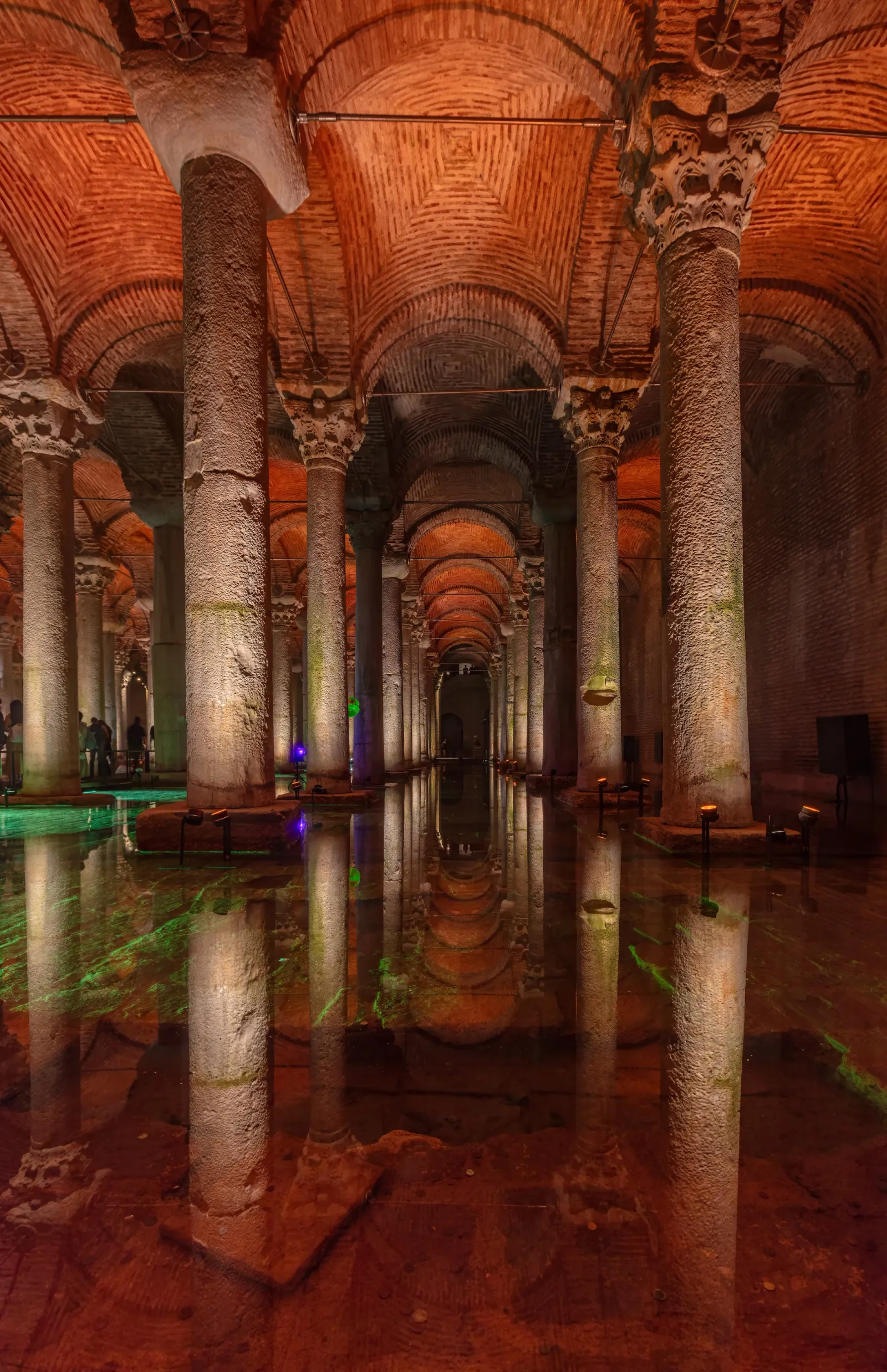
A vast Byzantine underground reservoir built to supply the city with water: hundreds of columns in dim light and two Medusa heads.
Don't miss
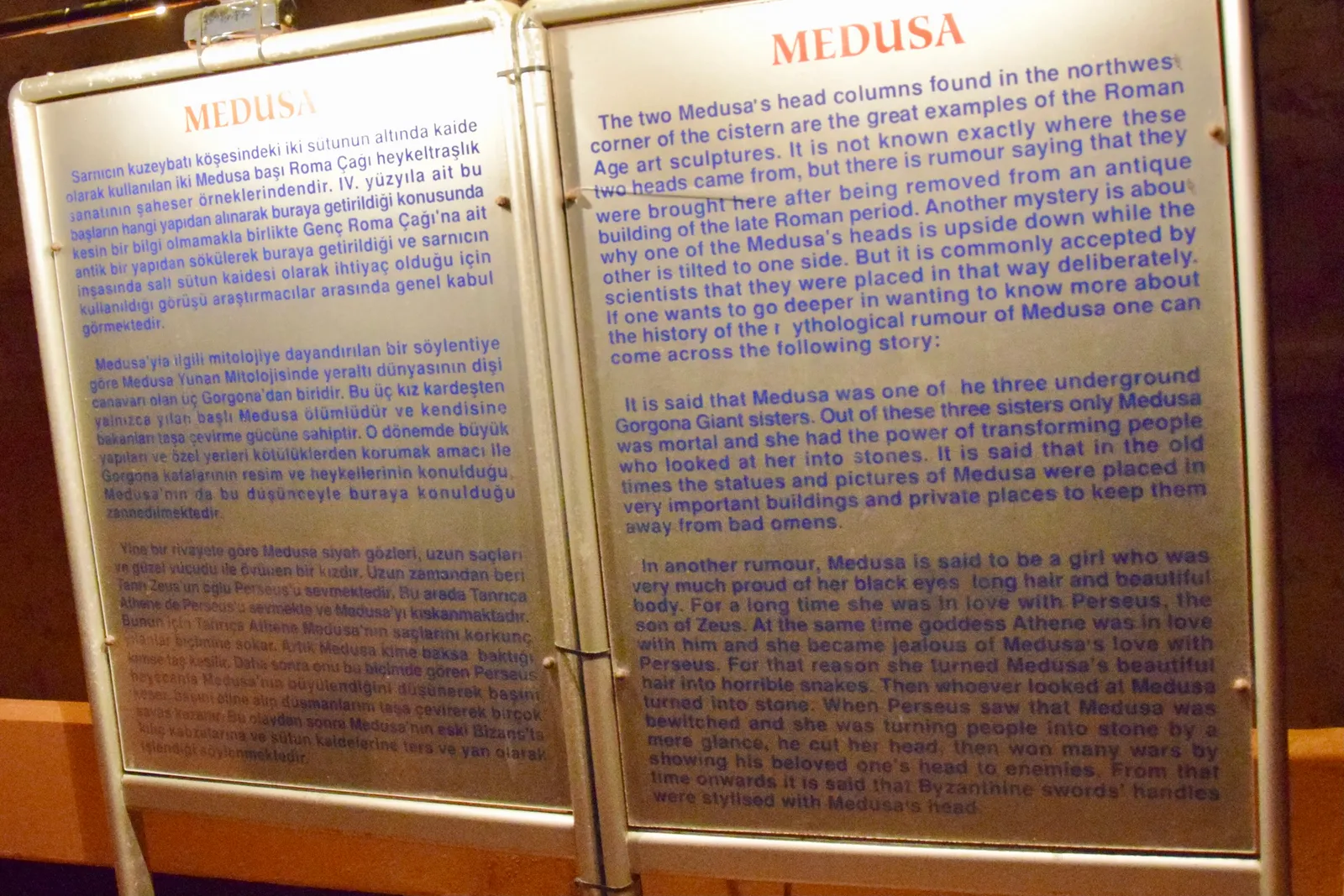
- 01Two Medusa-head column bases
- 02The "weeping" column with teardrop motifs
- 03The forest of columns and cross vaults
Opening hours
Summer season · 1 April – 14 November
| Mon | Tue | Wed | Thu | Fri | Sat | Sun |
|---|---|---|---|---|---|---|
| 09:00–19:00 | 09:00–19:00 | 09:00–19:00 | 09:00–19:00 | 09:00–19:00 | 09:00–19:00 | 09:00–19:00 |
Winter season · 15 November – 31 March
| Mon | Tue | Wed | Thu | Fri | Sat | Sun |
|---|---|---|---|---|---|---|
| 09:00–18:00 | 09:00–18:00 | 09:00–18:00 | 09:00–18:00 | 09:00–18:00 | 09:00–18:00 | 09:00–18:00 |
Last checked: 16 November 2026 · Source: Yerebatan Sarnıcı (Kültür ve Turizm Bakanlığı)
Tickets
| Visitor | Price |
|---|---|
| International visitor | TRY 2,250 |
- Müzekart accepted
- Free for Turkish citizens under 18
- Free for Turkish citizens 65+
- Free for children under 8
- Free for visitors with disabilities
Disabled visitors and one companion enter free.
Buy on the official siteLast checked: 16 November 2026 · Source: Yerebatan Sarnıcı resmî bilet satışı
Getting there
| Stop | Line | Walk |
|---|---|---|
| Sultanahmet | T1 Kabataş–Bağcılar tram | 250 m · 3 min |
| Gülhane | T1 Kabataş–Bağcılar tram | 500 m · 7 min |
Address: Alemdar, Yerebatan Cd. 1/3, 34110 Fatih
Walking times were measured along walking routes; crowds and security queues are not included.
Last checked: 16 November 2026 · Source: Metro İstanbul
Short history
The cistern was built in the 6th century, under the Byzantine emperor Justinian I. Roughly 140 by 70 metres, its roof rests on vaults carried by 336 columns arranged in 12 rows. Many columns were reused from older buildings, which is why their shafts and capitals do not match.
In the Ottoman period it supplied water to Topkapı Palace for a time. It became known again in the West in the 16th century through Petrus Gyllius, a European scholar who studied the city. It was repaired under Ahmed III and Abdülhamid II.
Cleaning work in the 1980s uncovered two Medusa heads reused as column bases, and the cistern opened to visitors in 1987. In 2026 its management passed from the Istanbul Metropolitan Municipality to the Ministry of Culture and Tourism.
Last checked: 16 November 2026 · Source: Kültür Portalı (Kültür ve Turizm Bakanlığı)
Visitor rules and accessibility
- Dress code: none
- Photo rules unknown
- Accessibility unknown